Tuning Fork Therapy
Tuning fork therapy is one of those practices that sounds simple and turns out to be surprisingly layered. A small metal fork is struck, it rings, and something in the body responds. The fork itself is nothing more than a two-pronged piece of steel or aluminium, but when it is struck it creates vibration energy, and that energy becomes a sound you can hear and often feel.
That combination of hearing and feeling sits at the heart of the practice. Tuning forks produce precise frequencies and gentle vibrations, and those subtle vibrations can help create moments of inner calm, enhance body awareness, and support a sense of balance and wellbeing. What follows is a plain explanation of how the therapy works, what the forks are doing on and around the body, and what people tend to take away from a session.
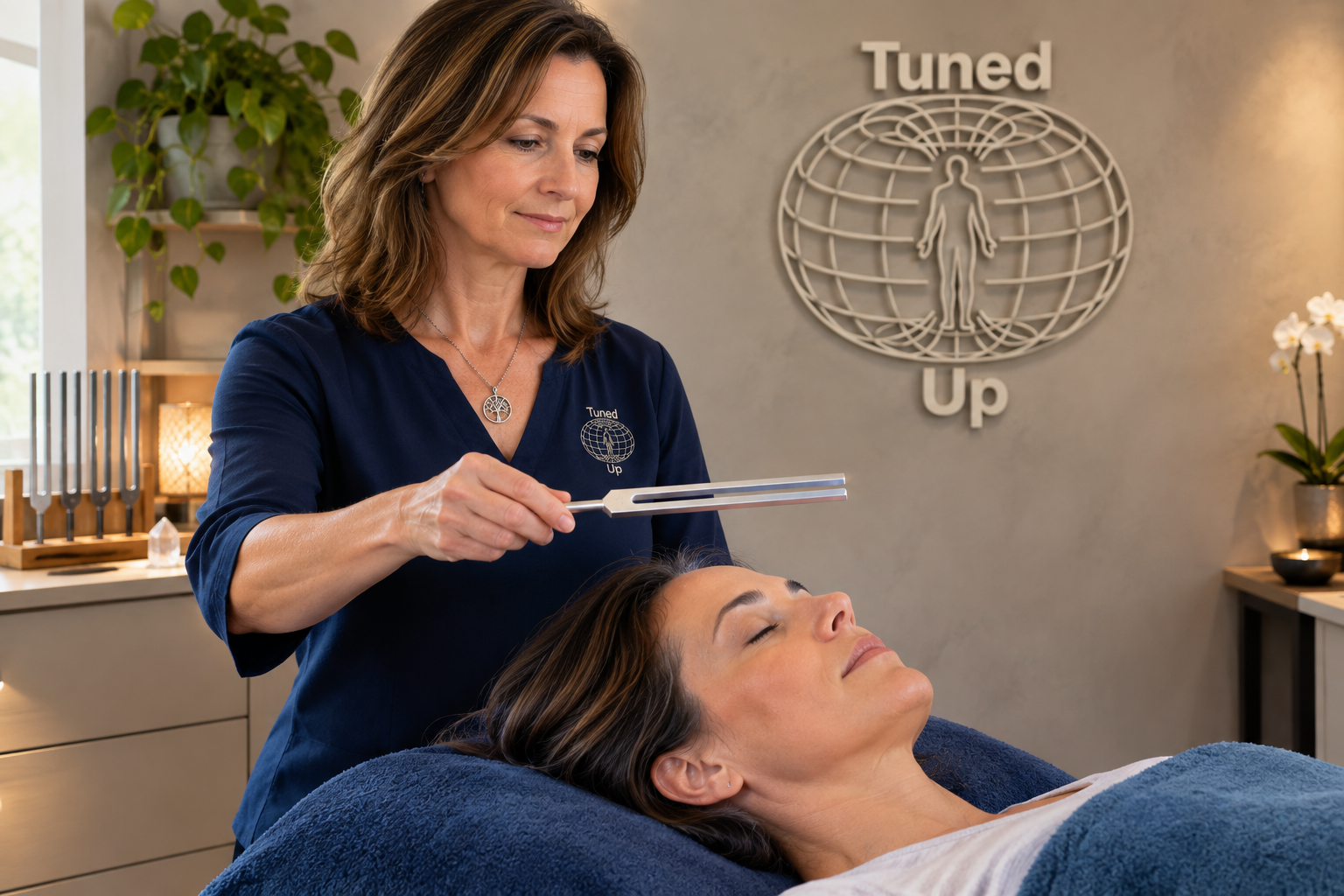
What Is Tuning Fork Therapy?
Tuning fork therapy is a sound-based wellbeing practice. A practitioner strikes a fork, holds it near the body or rests it gently against it, and lets the resulting tone and vibration do the work. It is described as a very gentle yet powerful modality, one that works with the nervous system to support the body and mind and to restore inner balance and health.
It is also known for bringing the body and mind into balance and for supporting the release of negative thoughts or emotions. Sessions tend to be quiet and unhurried. There is no massage pressure involved and no need to do anything in particular, because the work is carried by the sound itself.
Why Vibration Can Be Felt as Well as Heard
Sound is vibration, and a struck tuning fork sends that vibration out into the air around it. When the fork is close to the body, the same vibration can be picked up physically as a light hum or tingle. This is why the practice sits somewhere between listening and bodywork rather than neatly inside either.
For many people the appeal is exactly that double channel. The tone gives the mind something clean and constant to rest on, while the vibration gives the body something to notice. Tuning forks are used for meditation, mindfulness and conscious relaxation, and they offer an accessible way to explore sound, vibration and resonance without requiring any prior experience.
On the Body and Around the Body
One of the more useful distinctions in sound work is between forks used in the energy field around the body and forks that make contact with it. The main categories are straightforward once you know what each one is for.
- Plain, unweighted tuning forks are mainly used for sound healing in the energy field around the body, and they are the forks used to create musical intervals.
- Weighted tuning forks are a separate category, and they appear in hands-on healing work.
- Body tuners are a specific type of fork made for that closer style of work.
- Full sets allow a practitioner to move through a sequence of pitches rather than working with a single tone.
In practice, a session may involve both approaches. Forks ring out in the space around you, then a fork is brought nearer so the vibration is felt directly. The shift between the two is often what people remember most clearly afterwards.
Solfeggio Frequencies in Practice
Tuning fork work usually uses named frequency sets rather than random pitches. Solfeggio frequencies are one such set, and they are widely used in sound therapy because each one is a fixed tone rather than a range. Because a tuning fork holds a single pitch, its note is identical every time it is struck, which makes a sequence repeatable from one session to the next.
A practitioner may move through a series of forks, resting each one briefly near or on the body and letting the tone settle before the next one begins. Because the approach is client-led, you can ask to pause, change the pace or skip a frequency at any point. Nothing depends on believing in it first. You listen, and you notice what you feel.
What People Tend to Notice
Since the practice is gentle and the session is quiet, what people describe is usually subtle rather than dramatic. Common themes include:
- A sense of inner calm that builds over the session
- Sharper body awareness, noticing where tension sits
- A feeling of being more balanced and settled
- Emotional release, often described as letting go of negative thoughts
Where tuning forks meet the nervous system, the response tends to be one of downshifting. The tone is steady and predictable, and steadiness is often exactly what a busy nervous system is missing. That is part of why the practice appeals to people dealing with stress, fatigue or emotional overload, including those who feel mainstream approaches have only taken them so far.
Why Precision Matters More Than Price
Tuning forks are not all made the same way, and the difference is audible. The College of Sound Healing recommends the BioSonic range, which is made in the USA from space grade aluminium. Their concern with cheaper cast forks is that the metal is poured hot into a mould, producing a poorer quality instrument that does not deliver the pure harmonics a well-made fork does. Machined forks, by contrast, are cut from a single piece of metal.
If you are buying forks for your own practice, it pays to check how they are made rather than shopping on price alone. Specialist suppliers list calibration tuning forks, medical tuning forks, musical tuning forks, sound therapy tuning forks and the accessories that go with them, so it helps to know which category you actually need before you buy.
From Clinic to Sound Session
Tuning forks did not begin in wellness rooms. They have a long clinical history. Medical practitioners use them to assess vibration sense, and the vibration and sound emitted by the fork are used to observe sound conduction through bone, most familiarly in the Weber and Rinne tests. The same physical certainty that makes a fork reliable on a ward is what makes it useful in a sound session: strike it, and the pitch is exactly what it should be.
How Tuning Fork Therapy Fits Alongside Other Support
Tuning fork therapy is a complementary wellbeing practice rather than a medical treatment. It does not diagnose illness or disease, and it is not a replacement for assessment or care from a qualified health professional. If you have a health concern, speak to your GP.
Where the practice earns its place is as part of a wider approach. At Tuned Up, a small appointment-only practice in Herne Bay, tuning fork sound therapy is offered alongside bio-resonance wellness scanning and health coaching. That mix matters, because relaxation and self-awareness gained in a session have somewhere useful to go afterwards. The connection between feeling calmer and then doing something practical with that calm is often where the real value sits.
What a First Session Looks Like
Sessions are unhurried. You stay fully clothed and sit or lie comfortably while the practitioner works with a small number of forks over the course of the appointment. Some are held in the space around you, others are brought into contact with the body. You are welcome to ask questions, say when something feels good, or ask for a change of direction.
Afterwards, most people describe feeling quieter and more settled than when they arrived. There is nothing to prepare beforehand and nothing to practise between sessions, although plenty of people find they notice sound and vibration differently for a while afterwards.
Who Tends to Book Tuning Fork Therapy
Adults seeking complementary support often arrive for overlapping reasons: persistent pain, ongoing tiredness, stress, or a general sense of emotional overload. Others come simply because they are curious about sound and would rather experience it than read about it. The practice suits anyone comfortable with a quiet, gentle approach and happy to be led by their own responses rather than by a fixed protocol.
Frequently Asked Questions
Does tuning fork therapy really work?
Evidence for tuning fork therapy is largely based on reported experience rather than large clinical trials, so it is best understood as a relaxation and self-awareness practice rather than a treatment for specific conditions. People commonly describe feeling calmer, more balanced and more aware of their body after a session. If you are seeking help for a diagnosed condition, keep working with your GP or specialist alongside it.
What does a tuning fork do for your body?
A struck fork produces precise frequencies and gentle vibrations that can be heard and physically felt. Those subtle vibrations can help create moments of inner calm, enhance body awareness, and support a sense of balance and wellbeing. The practice works with the nervous system and is known for supporting the release of negative thoughts or emotions, which is why it is often used alongside meditation and mindfulness.
Can tuning forks stimulate the vagus nerve?
There is no confirmed evidence that tuning forks stimulate the vagus nerve, and reputable practitioners avoid making that claim. What can be said is that a steady, predictable tone gives the body something calm to settle into, and many people experience a general downshifting during a session. Treat any specific nerve-related claims you see online with caution and ask what is actually being offered.
What is the difference between plain and weighted tuning forks?
Plain, unweighted tuning forks are mainly used for sound healing in the energy field around the body, and they are the forks used to create musical intervals. Weighted tuning forks and body tuners are separate categories, appearing in hands-on healing work. Full sets combine different pitches so a practitioner can move through a sequence rather than working with one tone alone.
Do I need experience for tuning fork therapy to help?
No experience is needed. The practice is accessible by design, and sessions are client-led, which means you can pause, ask questions or change the pace at any point. You do not need to believe in anything for the sound and vibration to be felt. Turn up comfortable, stay curious, and let your own responses guide how the session unfolds.