What Is Bio Resonance?
Bio resonance sits in a quiet corner of complementary health, somewhere between energy medicine and modern wellness technology. It is built on a single, simple idea: that every cell in the body emits electromagnetic frequencies, and that a device can pick up those frequencies, read them, and use them to build a picture of how the body is behaving energetically.
People usually arrive at bio resonance for a reason. Persistent tiredness, stubborn digestive trouble, aches that never quite resolved, or a feeling that something is slightly off but nothing has shown up in routine tests. A bio resonance scan is not a medical test, and it does not replace one, but for many people it offers a different angle on their health and a fresh starting point for change.
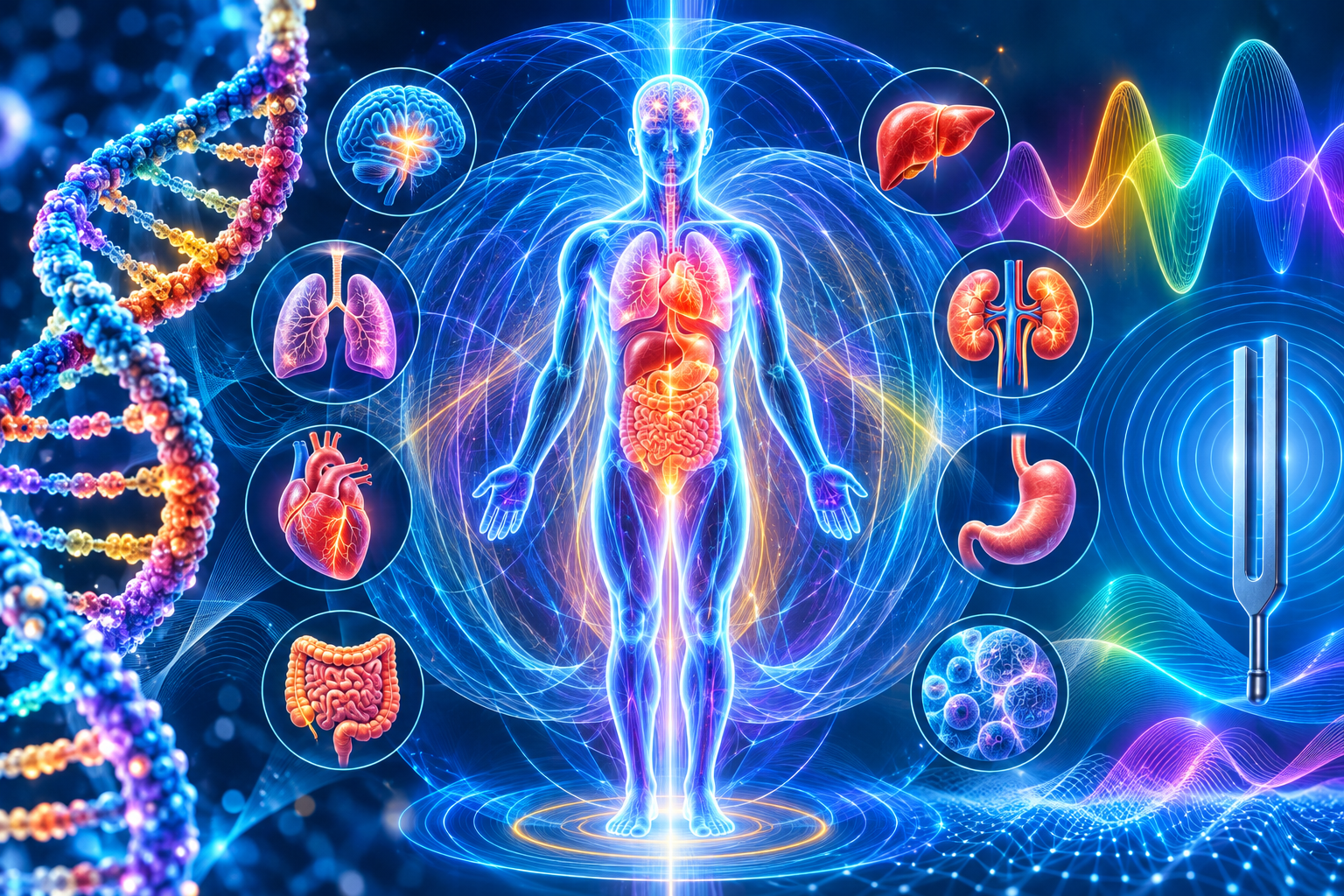
What Is Bio Resonance?
Bio resonance, often written as bio resonance, is a complementary wellness practice based on the idea that every cell in the body emits electromagnetic frequencies. A bio resonance machine is used to measure the frequency of energy wavelengths coming from the body, and those measurements are then interpreted to understand what is happening at an energetic level.
Practitioners of the approach describe it as a form of oscillation medicine, founded on the theory of quantum physics that all matter is in motion, oscillating and vibrating. In practical terms, a scan is a way of gathering information about the body as a system of frequencies rather than as a set of separate parts.
Some descriptions of bio resonance go much further and claim the readings can be used to diagnose disease. That claim is contested, and it is important to be honest about it. Memorial Sloan Kettering Cancer Center describes bioresonance therapy as an unproved device used to diagnose and treat cancer, allergies, arthritis, and chronic degenerative diseases. In the UK, the Advertising Standards Authority publishes advice on bioresonance therapy, which shapes how practices are allowed to describe what they do. That is why careful practitioners present bio resonance as a wellness assessment tool rather than a diagnostic service, and why they avoid promising outcomes they cannot guarantee.
The Theory Behind Bio Resonance
The underlying idea is straightforward. If all matter oscillates, then cells, tissues and organs each have their own vibrational signature. Where health is good, those signatures are described as coherent and balanced. Where there is stress, inflammation, or an ongoing burden on the body, the signatures are said to look different, and that difference is what the device is claimed to detect.
There is published research exploring bio resonance as a therapy rather than a wellness scan. One 2022 paper by D Muresan describes bio resonance therapy as a method of energy treatment that processes the electromagnetic information of the human body using a sensitive Mora Nova device, and examines its use in mild and moderate depression. It is a small contribution to a much wider debate, and it does not settle the question of how well the approach works. What it does show is that researchers are still asking the question.
What Happens During a Bio Resonance Scan?
A bio resonance appointment is not an invasive experience. There are no needles, no fasting, no radiation and nothing to swallow. Clients typically sit comfortably while the device takes its readings, whether through hand-held contacts, sensors or a cable connected to the body. The session is usually calm and unhurried, and the results are discussed afterwards as a set of energetic patterns and tendencies rather than a medical verdict.
In-Person Appointments
Many people prefer to attend in person, particularly for a first scan. Being in the room allows the practitioner to talk through each finding as it appears, answer questions on the spot, and connect the readings to what the client is actually experiencing day to day. It also makes it easier to combine the scan with other elements of a session, such as relaxation work or a tuning fork sound treatment, and to agree on practical next steps before leaving.
Remote Scanning Through the Quantum Field
Some practices now offer a remote bio resonance scan, which is carried out without the client being physically present. The explanation given is that the body’s energetic information is not limited to the room it occupies, and that a remote scan can be performed through the quantum field using what practitioners describe as state of the art Tesla technology. For anyone with limited mobility, a long commute, or a schedule that makes travelling to an appointment difficult, that opens up access that would otherwise be out of reach.
Remote sessions suit people who are already comfortable with energy-based approaches and who want convenience without losing the conversation. A phone or video call usually accompanies the scan so the findings can be explained and discussed in full, and follow-up questions can be raised later by email or in a subsequent session.
What a Bio Resonance Scan Might Look At
Practices vary in how they frame a scan, but the areas commonly reported include the following:
Whole-body energy patterns and where the body appears to be under strain
Food intolerances and sensitivities, which many clients are keen to explore
Heavy metals and other environmental burdens
Chemicals and everyday exposures
Microorganisms, including bacterial, viral and fungal patterns
Organ and system level tendencies that may be worth supporting
These categories are how practitioners describe the scan, not diagnoses confirmed by laboratory medicine. Treat the list as a set of prompts for conversation and lifestyle review, not as a set of confirmed conditions.
Benefits of Having a Bio Resonance Scan
A Different Perspective on Ongoing Symptoms
For people who have been told their blood tests are normal while still feeling unwell, a scan can feel like a genuinely different conversation. Instead of dismissing the symptoms, it offers a framework for talking about them and a structure for looking at diet, environment, stress and daily habits together rather than in isolation.
Practical Starting Points for Change
A scan is only useful if it leads somewhere. The most valuable part of the appointment is often the discussion that follows, where findings are translated into a handful of realistic adjustments: foods to try removing for a few weeks, areas of the diet to strengthen, sleep and stress habits to revisit, and simple tracking to see whether anything shifts. That is where a scan becomes a planning tool rather than a curiosity.
A Calm, Non-Invasive Experience
There is nothing demanding about the process itself. No needles, no discomfort, no recovery time. Many clients describe the session as relaxing, and for anyone who finds clinical environments stressful, that softer setting makes it easier to speak openly about what has been going on.
Convenience Through Remote Sessions
Remote scanning removes the practical barriers that stop people attending appointments, particularly those managing fatigue, chronic pain or a busy caring role. Being able to have the scan and the follow-up conversation from home means the support is more likely to actually happen rather than being postponed indefinitely.
Something to Build On
A scan works best as the first step rather than the whole journey. Combining it with sound therapy, coaching or structured habit work gives the findings somewhere to go. Follow-on frequency-based treatments described as meta therapy and Rife are also offered by some practices, and clients often pair a scan with coaching sessions held in person or by video call to keep momentum going over several weeks.
What Bio Resonance Cannot Do
Honesty matters here more than enthusiasm. Bio resonance is not a diagnostic tool, it does not identify or treat illness or disease, and it is not a substitute for medical care. If you have symptoms that concern you, unexplained weight loss, persistent pain, bleeding, a lump, or anything that is getting worse rather than better, arrange to see your GP.
The evidence base is limited and contested, which is why any practitioner making confident claims about curing conditions is going beyond what the research supports. A responsible scan is offered as a wellness assessment, with clear boundaries, no promises, and no pressure to stop any treatment your doctor has recommended.
Getting the Most From a Session
Arrive with a clear sense of what you want to understand. Write down your main symptoms, how long they have been going on, what you have already tried, and any patterns you have noticed around food, sleep, stress or energy levels. Bring your questions, including the sceptical ones. Afterwards, give the recommendations enough time to show whether they help, usually a few weeks rather than a few days, and keep notes so you can compare one scan with the next.
Above all, treat the results as information to weigh up rather than instructions to follow blindly. A good practitioner will welcome that approach and will be comfortable saying that some findings are uncertain, and that only time and observation will tell.
Frequently Asked Questions
Is bio resonance scientifically proven?
No, it is not established by mainstream science. Reviews and cancer information services describe bioresonance devices as unproved, and the published research is limited. Some small studies have explored its use as a therapy, including work on mild and moderate depression, but the evidence is not strong enough to call the approach proven. Approach it as a complementary wellness tool, not a validated medical test.
Can a bio resonance scan diagnose an illness?
No. A scan does not diagnose disease and should never be used in place of proper medical assessment. UK advertising guidance restricts how practices may describe bioresonance therapy, which is why reputable practitioners frame it as a wellness assessment. If you have symptoms that worry you, see your GP and let them investigate properly before drawing conclusions from any complementary scan.
Is a remote scan as useful as an in-person appointment?
Practitioners who offer remote scanning say the readings are equivalent, describing the process as working through the quantum field using Tesla technology rather than depending on physical proximity. What differs is the experience. An in-person visit gives you the room, the conversation and the option to combine the scan with hands-on treatments. Remote sessions mainly offer convenience.
How should I prepare for a bio resonance appointment?
Keep it simple. Write down your main symptoms and how long you have had them, note anything you have already tried, and think about what you most want to understand. Bring a list of questions, including the awkward ones. There is no special preparation needed, and no need to change medication or treatment on the basis of a scan.
What should I do with the results afterwards?
Use them as a starting point for observation and small changes. Test one or two suggestions at a time, give them a few weeks, and note what shifts. Share anything significant with your GP if it relates to a diagnosed condition. A scan is most valuable when it feeds into coaching, sound therapy or structured habit work rather than sitting in a drawer as a set of unexplained figures.